Industry
health tech
Client
PDHI
Leading UX Transformation for a Legacy Wellness Platform
As the first UX designer in a decades-old SaaS company, I established the company’s first UX practice, introduced a centralized, scalable design system, and implemented design strategy and analytics to modernize member-facing products. This reduced branding update complexity, ensured consistency, and achieved 100% WCAG compliance — a critical requirement for top clients.
Project overview
Type of work
UX/UI Design Design System Foundations UX Strategy Accessibility / WCAG Compliance Data Analysis Stakeholder Alignment Inform Product Roadmap
Tools
Figma FigJam Miro Excel / Google Sheets Slack / Teams Jira
Date
January 2023 to January 2024
Challenges
- Outdated Design / User Experience: The platform looked outdated and inconsistent, making the user experience feel fragmented across pages. Program managers and clients struggled to maintain a cohesive look and feel, and ad-hoc UI changes created extra work and confusion. - Lack of Centralized Design System: Branding updates were manual, inconsistent, and only applied to individual pages. There was no scalable system for managing styles, themes, or configuration. Non-designers were responsible for changes, leading to errors, duplicated effort, and inconsistent UX across the platform. - Compliance & Accessibility Requirements: The platform needed to meet WCAG accessibility standards, a critical requirement from top clients. Without a proper design system and accessibility checks, client deliverables could fail regulatory audits.
Solutions
Conducted a rapid design audit and competitive benchmark to identify gaps and opportunities in the member-facing platform.
Defined a UX vision for the company: “Make a positive impact in business growth through user experience design.”
Established key work streams: Data Analytics, UI Design Standards, KPIs, and Design System Foundations.
Introduced Figma as the primary design tool, trained the team, and connected design-to-development workflows to enable faster, consistent implementation.
Partnered with developers to migrate from an outdated Bootstrap version, co-designing and testing the first redesigned modules, improving usability and consistency.
Implemented Google Analytics in the member app to collect behavioral data, which informed widget prioritization and influenced the product roadmap.
Redesigned initial widgets, resulting in early engagement improvements and measurable increases in usage.
Ensured 100% WCAG compliance across the platform by embedding accessibility standards into the design system, passing all regulatory audits required by top clients.
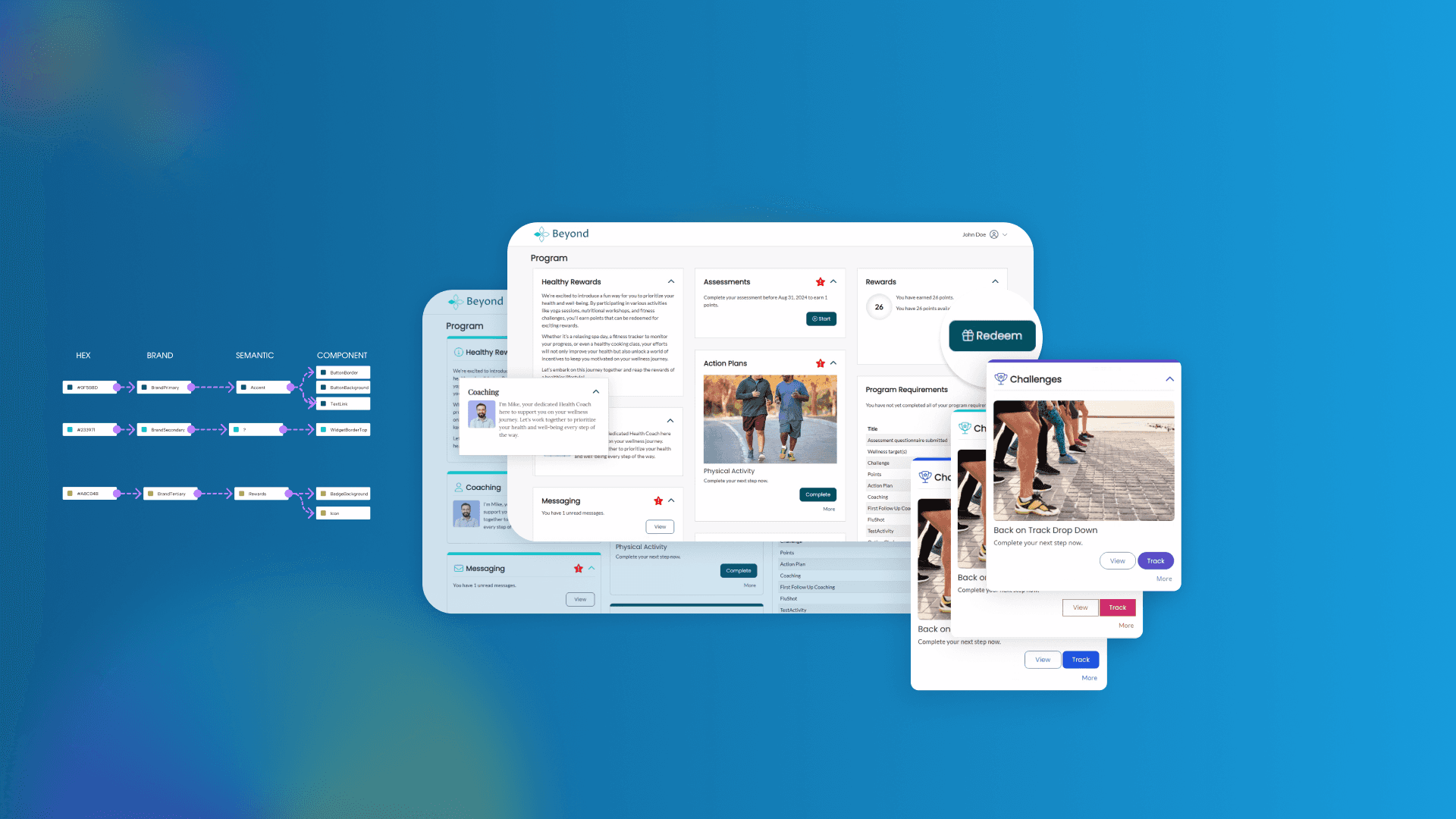
Built a scalable design system that allows future branding and interface updates to be applied consistently across all modules, streamlining workflows and reducing update complexity.
Achievements
Laid the first design system foundations: standardized tokens for colors, typography, and components, accelerating developer handoff by ~30%.
Empowered the custumer success team (non-designers) to create aesthetic sites and eliminated client UI related tickets: mapped client-defined primitive colors (e.g., brand primary, secondary, and tertiary) to semantic tokens (e.g., accent, rewards, etc) and then to UI components (e.g., button background, border, etc). This ensured a consistent and visually polished look & feel across the platform, reducing client-reported UI adjustment tickets to zero and cutting implementation time by ~80%.
Simplified client branding configuration by 85%: reduced options from 48 to 7, aligning with real client brand guidelines and cutting implementation time for new programs by ~70%.
Enabled design-development alignment: developers can extract CSS directly from Figma, reducing friction and improving delivery speed.
Introduced data-driven prioritization: redesigned modules based on revenue impact and user engagement, focusing resources on features representing ~60% of total user interactions.
Delivered early measurable impact: redesigned initial widgets led to a ~20% increase in engagement and higher adoption rates.
Ensured accessibility compliance: design system embedded WCAG standards, passing 100% of regulatory audits required by top clients.
Built for scalability: created a system that supports future updates and new modules, allowing consistent experiences across the platform while reducing future design and development effort by ~50%.